

Pokémon TCG damage comes from attacks and helps you knock out your opponent’s Pokémon. It’s tracked with counters- 10 damage per counter. If the total damage equals or exceeds a Pokémon’s HP, it’s Knocked Out, and you take a Prize card. This guide explains the rules for applying damage in Pokémon TCG.
This post may contain affiliate links. See our affiliate policy for more information.
Here’s the thing nobody tells new players about dealing damage in Pokémon cards: doing it properly is deceptively complex.
On the surface, it seems simple. Your attack says it does 100? Cool, deal 100. But then you’ve got damage modifiers, weakness, resistance, damage counters that act differently from regular damage, and the list goes on.
The good news? It all follows a system. Let’s break down how damage works in Pokémon TCG and the rules that often confuse players.
Key Takeaways
- Base damage is the number on the right of the attack name. It’s where calculations begin- modifiers stack on top.
- Calculate final damage in this order: Base → Modifiers → Weakness → Resistance.
- Some card effects break the rules for normal damage math.
- Damage done by counters does not count as attack damage and bypasses modifiers such as Weakness/Resistance and card effects.
- Special Conditions like Poison/Burn apply damage in between turns.
- Learn how to track and calculate damage correctly to level up at PTCG.
Base Damage
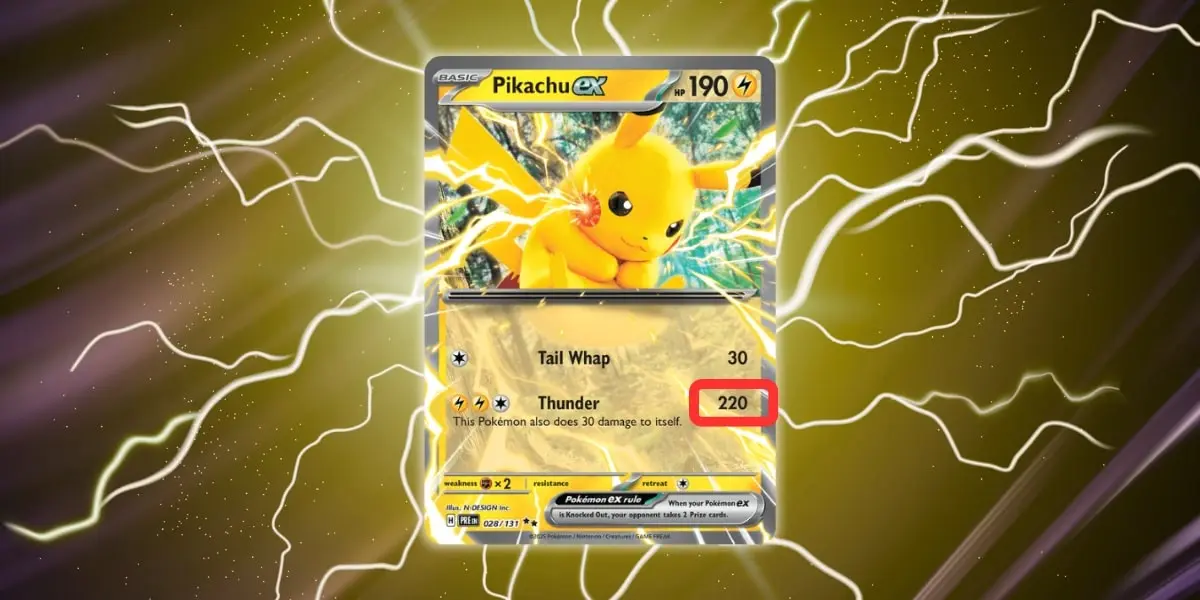
Every Pokémon card attack has a number printed next to it- that’s your base damage. This is your starting point. Everything else builds on (or subtracts from) that number.
If your Pikachu says “Thunder 220”, then the base damage is 220. Some attacks say something like “This attack does 20 damage to each of your opponent’s Benched Pokémon”. This is still base damage. Just spread-based. Others, like “Hypnosis,” don’t cause damage at all; they instead cause a card effect.
Damage Modifiers
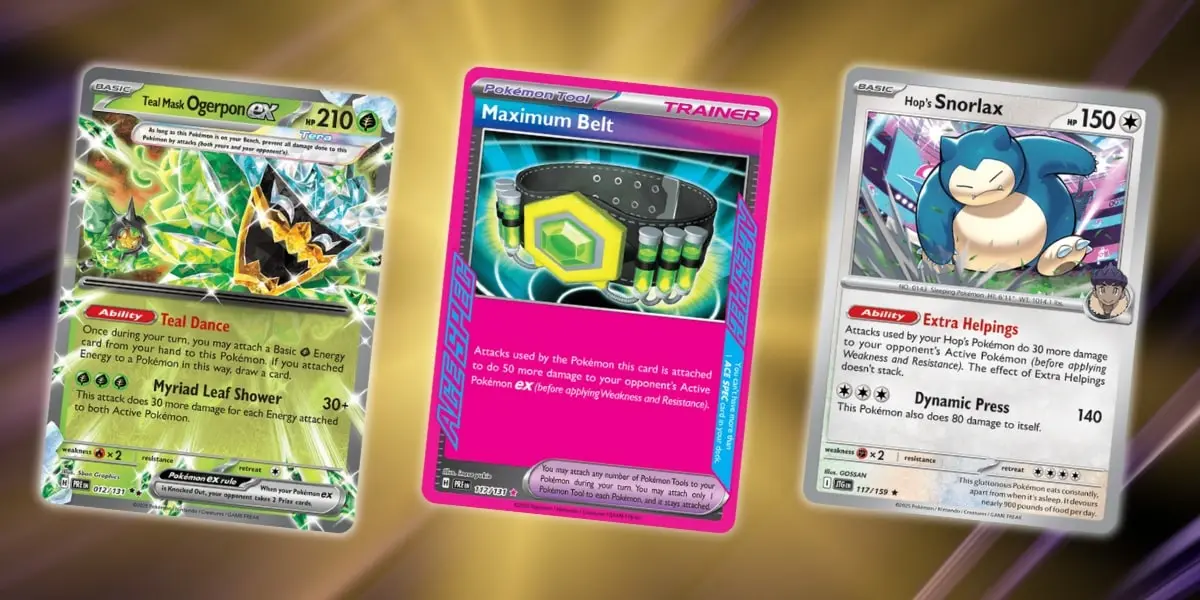
Now it’s time to add some spice- let’s break down how damage modifiers work in the Pokémon TCG. Modifiers are anything that increases or decreases the amount of damage your attack dishes out. These can come from:
- The attack itself (“This attack does 30 more for each Energy attached…”).
- Trainer cards (like Maximum Belt, which adds +50 vs. Pokémon ex).
- Abilities.
Let’s say your base damage is 100, and you’ve got a Maximum Belt attached. That’s 150 damage now. Easy math.
Just don’t get lazy here- modifiers stack and they matter. That extra damage can be the difference between a knockout and leaving your opponent alive with 10 HP.
Pokémon TCG is a game of margins. Keep mental tabs on all damage modifiers before you attack. Don’t just fire blindly.
Weakness and Resistance Modifiers
Here’s where things get real hot. Weakness and Resistance are Pokémon TCG’s built-in damage levers. Ignore them and you’ll be vulnerable to unanticipated knockouts.
Weakness is shown as “x2” on a Pokémon card. If your attack’s type matches the opponent’s Weakness, you double your total damage. So 100 damage x2 = 200.
Resistance is usually -30 damage (though it has varied in older sets). If your attack’s type matches their Resistance, subtract 30 from your base damage. That same 100 damage becomes 70, possibly sparing your opponent and giving them one more turn to attack.
Special Condition Damage
Poison, Burn, and Confusion are Special Conditions that inflict damage. These aren’t modifiers to your base attack- they are indirect damage dealers in Pokémon cards.
Poison deals 10 damage between turns (one damage counter). Burn does 20 between turns unless a coin flip saves you. Confusion does 30 damage if the attacking Pokémon is confused and flips tails before attacking.
These effects stack with normal damage and can KO Pokémon between turns. Biggest rookie mistake? Ignoring special condition damage. That Poison damage can chip away and KO your Active Pokémon before you know it.
Tracking Damage
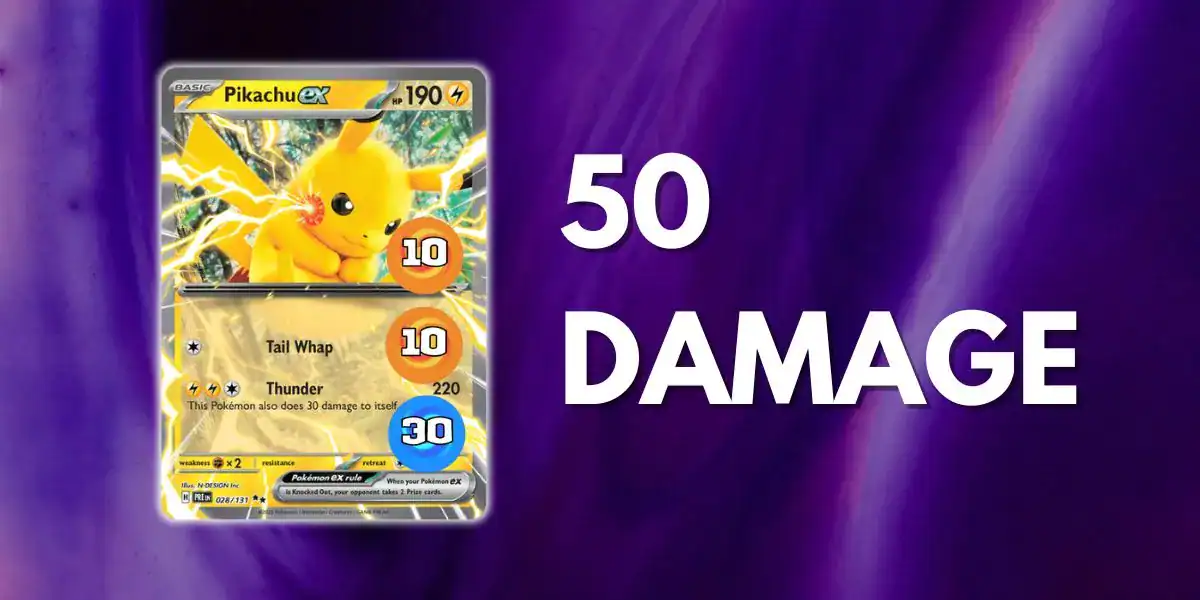
Alright, let’s talk damage counters– your on-field math tools. Every time a Pokémon takes damage, you don’t write it down. You show it. That’s where damage counters come in. Each one equals 10 damage. So if your Pikachu eats a 50-damage attack, you slap five counters on it.
So where do you get these things?
If you grabbed a starter deck, congrats- you probably already own some. Most beginner decks come with punch-out cardboard counters. They’re basic, but they get the job done.
No starter deck? No problem. You’ve got options:
- Print them. Go to our PTCG resources page to download and print damage counters for free.
- Use dice. This is the pro move. Most players toss down six-sided dice- the number facing up tells you the damage (a 4 means 40 damage). It’s fast, clear, and tidier compared to loose counters.
- Improvise. Beads, coins, bottle caps- anything works in casual games as long as it’s readable. Just don’t use gummy bears. Trust me on that one.
Point is: however you track damage, just keep it clear and consistent. In serious games, the last thing you want is a messy board or “Wait, how much damage is that again?” moment.
Damage Counters vs. Direct Damage
Yes, there is a difference, and this part trips up a LOT of players, both new and experienced. When a card says, “put 3 damage counters on a Pokémon”, it’s NOT the same as dealing 30 direct attack damage.
Direct damage is affected by modifiers like Weakness, Resistance, and status effects. Damage counters are placed directly on a Pokémon, ignoring modifiers.
If your Opponent’s Pokémon has Resistance to your type, 100-damage from an attack gets nerfed to 70. But placing 10 damage counters skips right past that. In other words, you get to place 100-damage onto your opponent’s Pokémon despite the Resistance.
So if you’re up against a wall or anything with annoying Resistance or card effects, be smart. Use attacks that place damage counters instead of trying to brute force with direct damage.
Step by Step Pokémon TCG Damage Calculation
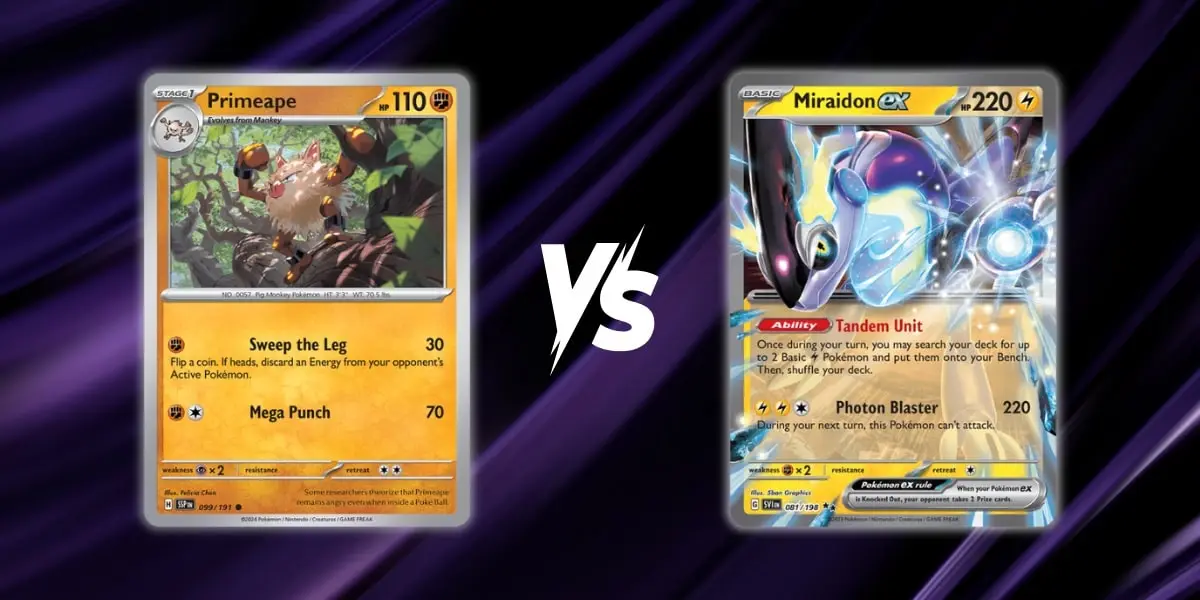
Alright. It’s number-crunching time- but I promise this is the kind of math that makes you a better Pokémon card player.
Let’s walk through a full Pokémon TCG damage example so you can see how the pieces come together in a real battle scenario.
Your Setup:
- You’re using a Fighting-type Primeape.
- The attack says “70 base damage.”
- You’ve got a Maximum Belt attached (+50 against Pokémon ex).
- Your opponent’s Active is an Electric-type Miraidon ex.
- Miraidon ex has a Weakness to Fighting (x2).
Here’s the breakdown:
- Start with base damage: 70.
- Add modifiers: +50 (Maximum Belt) to turn it into 120.
- Apply Weakness: 120 x 2 = 240
- Final damage dealt = 240
That’s a clean knockout on a powerful Miraidon ex- served by a puny single-prize Primeape.
But let’s tweak it a little to show how things can change if the opponent had resistance to your type:
- Base: 70
- Add modifier: +50 = 120
- Apply Resistance: 120 – 30 = 90
- Final damage dealt = 90
Still a KO? Probably not. And that -30 may have just saved your opponent’s bacon. Know your Pokémon TCG damage numbers!
Always keep in mind your opponent’s Pokémon HP when calculating damage- missing a KO by just 10 HP because you misread their total can cost you the game.
Common Pokémon TCG Damage Mistakes
Let’s talk about how people mess up damage maths in Pokémon cards. Because it happens- a lot.
Mistake #1: Wrong order of operations
Always apply damage modifiers before Weakness and Resistance. Don’t flip the script or you’re calculations could put you at a disadvantage or even land you in hot water during competitive PTCG.
Mistake #2: Thinking Weakness/Resistance applies to the Bench
Nope. Unless the card explicitly says it affects Benched Pokémon and references Weakness/Resistance, it doesn’t apply there.
Mistake #3: Mixing up direct damage and damage counters
An effect on your opponent’s card might say “During your opponent’s next turn, this Pokémon takes 50 less damage from attacks.” But if you’re placing damage counters (not dealing direct damage), that effect won’t apply. They have different effects and follow different rules.
Mistake #4: Forgetting between-turn damage
Special Conditions like Burn and Poison apply damage between turns. That KO might not come from a big attack- it might come from the 10 Poison damage in between turns.
Exceptions In Pokémon TCG Damage Rules
Now let’s get even weirder. Not every card plays by the normal rules of Pokémon TCG damage. Some deliberately break the rules- and you need to know how to spot them.
1. Card effects that negate Weakness/Resistance
Some cards, like Pokémon Abilities or Tools, activate effects that cancel Weakness and Resistance. These are game-changing abilities that throw your math off if you’re not paying attention.
2. Damage prevention abilities
Some Pokémon Abilities can block attack damage entirely. Always read the card effects carefully.
Other abilities allow you to move damage, heal it, or even recover Pokémon from the discard pile, giving you powerful recycling strategies if you manage your resources carefully.
3. Multiple modifiers stacking at once
This is where it gets nasty. You can have a Tool (+30), a Stadium (+10), an Ability (+20), and a modifier on the attack itself. That 90 base damage attack can suddenly hit for 180+ if you’re stacking boosts the right way.
If you’re not accounting for all your bonuses, you’re leaving KOs on the table. And if you aren’t aware of your Opponent’s bonuses, you’re Active will be KO’d faster than a Magikarp in a powerplant.
Pro Pokémon TCG Damage Tactics
Okay. You know the mechanics of how damage works in Pokémon TCG. Now let’s talk strategy. Because winning battles isn’t just about understanding the math- it’s about how to exploit the math.
1. Know the Meta
If everyone’s playing Miraidon ex (Weak to Fighting), maybe it’s time to run some spicy Fighting-types as either a full-blown deck or as tech attackers (1 or 2 Pokémon included in your deck to counter Miraidon). Punishing Weakness is one of the fastest ways to flip matchups.
When you’re building a Pokémon TCG deck, choosing attackers that optimize damage- either by exploiting Weakness or bypassing Resistance- can give you a serious edge in the current meta.
2. Use “tech” cards that place damage counters
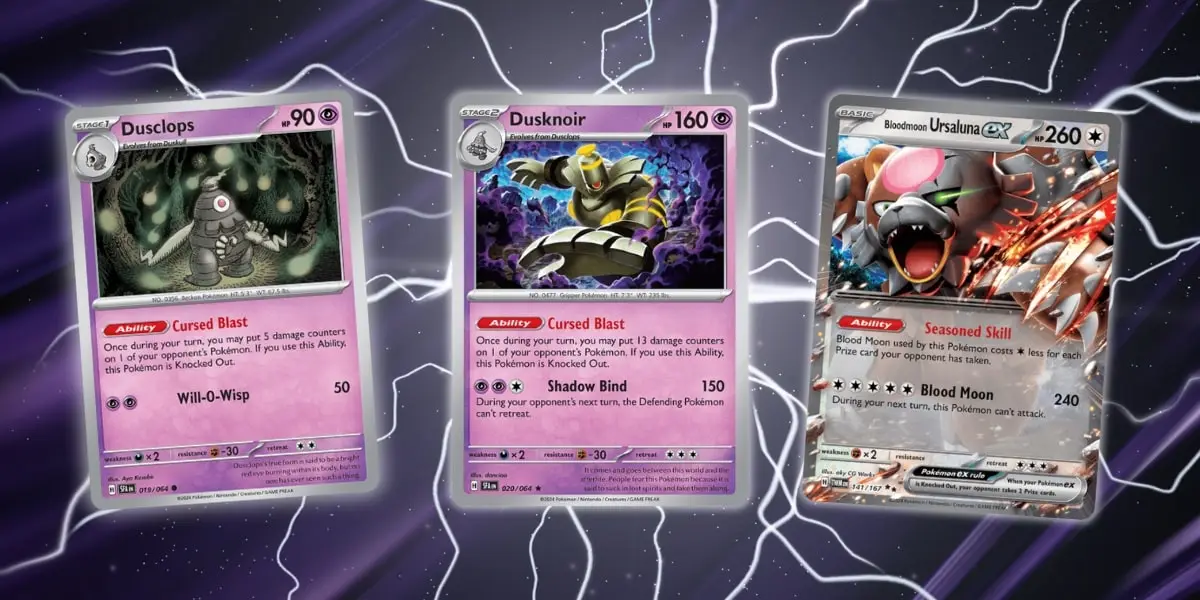
If Resistance is wrecking your game plan, bring in attackers that place damage counters instead of dealing direct damage. It’s a sneaky workaround that wins games. Dusclops (SFA 019) and Dusknoir (SFA 020) are solid choices for many decks.
3. Track your damage properly.
Use high-quality damage dice and counters- nothing faded and eroded. Misplaced damage can lead to judge calls that’ll end your tournament-winning chances before it’s even started. Be sharp.
4. Use Colorless attackers to dodge Resistance
No Pokémon resist Colorless type, so a strong Colorless-type attacker like Bloodmoon Ursaluna ex (TWM 141) can deal massive damage and plow through a variety of decks without getting bogged down in type matchups.
5. Pre-calculate your damage
This is what separates skilled Pokémon TCG players from newbies. Before you attack, know your numbers. Don’t wait until after the attack to realize you were 10 short of a KO. Think through base damage, modifiers, Weakness, and Resistance every time.
Conclusion
Mastering how damage works in Pokémon TCG gives you a whole new level of control over the battlefield. It isn’t just a maths- it’s a skill. When you know how to calculate, manipulate, and plan around damage, you unlock a whole new level of control over the game.
Whether it’s flipping matchups with Weakness, bypassing Resistance with counters, or stacking modifiers to secure a KO- damage knowledge is power.
Want to win more battles? Know your damage.If you’re still getting started and want a full walkthrough, check out our beginner’s guide and learn to play Pokémon TCG from the ground up.
FAQ

Kalam is a PTCG gameplay expert and content creator. He started playing and collecting Pokémon cards since 1996. When he’s not working, you can find him nerding out on Anime!
Ready To Level Up At PTCG?