

The five Pokémon TCG Special Conditions are Asleep, Burned, Confused, Paralyzed, and Poisoned. Master the rules of this core gameplay mechanic to gain the edge in your next Pokémon card battle.
This post may contain affiliate links. See our affiliate policy for more information.
When playing Pokémon TCG, it’s the non-flashy stuff that can really mess you up. Yup. I’m talking about Special Conditions.
They stall, disrupt, and chip away at your Pokémon. And if you’re not paying attention, your chances of winning the battle can vanish faster than an Abra hiding in the grass.
Let’s talk about Special Conditions in Pokémon cards- what they are, how they work, and the rules you need to know.
Key Takeaways
- Special Conditions in Pokémon TCG only affect your Active Pokémon- Benched Pokémon are not affected.
- You can’t stack rotational conditions (Asleep, Confused, or Paralyzed), but they can stack with marker-based conditions (Poison and Burn).
- All condition effects are applied during the Pokémon Checkup phase, and there’s a strict order to how they resolve: Poisoned, Burned, Asleep, Confused, then Paralyzed.
- Options to remove a condition include’ retreat, evolve, devolve, and using Trainers and Abilities.
- Understand the rules and nuances of Special Conditions to gain an edge in the 2025 Pokémon TCG metagame.
Pokémon TCG Special Conditions Overview
Special Conditions, also called Status Conditions or Status Effects, are effects that negatively affect your Pokémon.
If you’ve ever played the video games you’ll know the deal. But Pokémon TCG Special Conditions work slightly differently to their videogame counterparts.
How each Special Condition works in Pokémon cards:
| Special Condition | Indication | Effect | Can Stack With |
|---|---|---|---|
| Poisoned | Poison marker | 10 damage after each turn. | Burn and Asleep/Confused/Paralyzed |
| Burned | Burn marker | 20 damage after each turn. Flip a coin. Heads- burn heals. | Poisoned and Asleep/Confused/Paralyzed |
| Asleep | Rotate 90° counterclockwise | Cannot attack or retreat for 1 turn. Flip a coin. Heads- sleep heals. | Burn and Poisoned |
| Confused | Rotate 180° upside down | Flip a coin before attacking. Heads- attack as normal. Tails- 30 damage to self. | Burn and Poisoned |
| Paralyzed | Rotate 90° clockwise | Cannot attack or retreat for for 1 turn. | Burn and Poisoned |
Most of the time, it’s attacks that inflict conditions on Pokémon. But some Abilities, Tools, or Supporter Cards can dish them out too. And when they do, the condition effects are applied during the Pokémon Checkup phase– that “in-between step” that happens after each turn (both yours and your opponent’s).
Let’s dive deeper into how each Pokémon TCG Special Condition works.
Poisoned
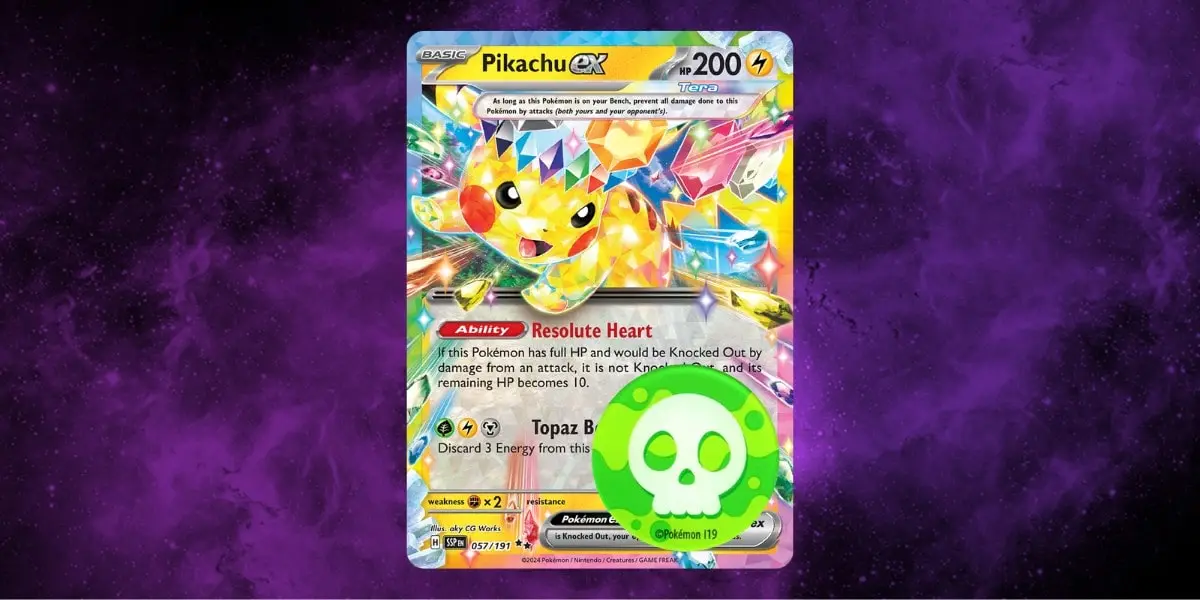
Poison isn’t loud. It doesn’t do a whole lot of damage. But it just works. And it’s arguably the most dangerous Special Condition in Pokémon TCG..
After every single turn, like clockwork, Poison chips away at the affected Pokémon. And if you don’t clear it fast, that damage can accumulate fast.
What makes Poison especially dangerous in 2025 are the cards that crank up the potency. Toxicroak ex (SVI 131) hits with Toxic Ripper to turn 10-damage into 60 per turn. Meanwhile, Perilous Jungle (TEF 156) adds another +20 poison damage each turn.
Poison isn’t just a nuisance in the 2025 meta- it’s got potential in Rogue Poison decks.
Burned
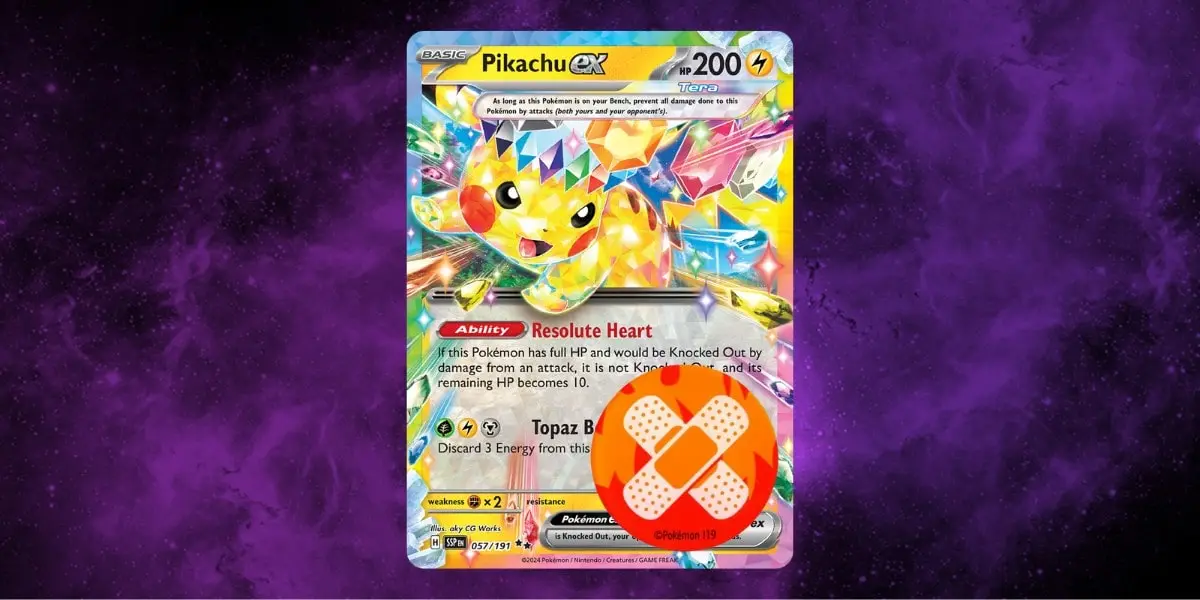
Burn guarantees 20-damage for at least 1 turn. This makes it more reliable than other coin flip-dependent conditions like Sleep or Confusion, but still less consistent than Poison or Paralysis, which stick around no matter what.
Despite consistency issues, burn can still add offensive juice to Fire-type decks in two ways.
Firstly, the extra 20-damage from Burn can be all it takes to fix a “near-KO attack” to clinch a one-hit KO. Secondly, it can weaken the affected Pokémon to set up a next-turn KO.
Overall, Burn won’t be the centerpiece of your deck. But it can certainly help you hit harder.
Asleep
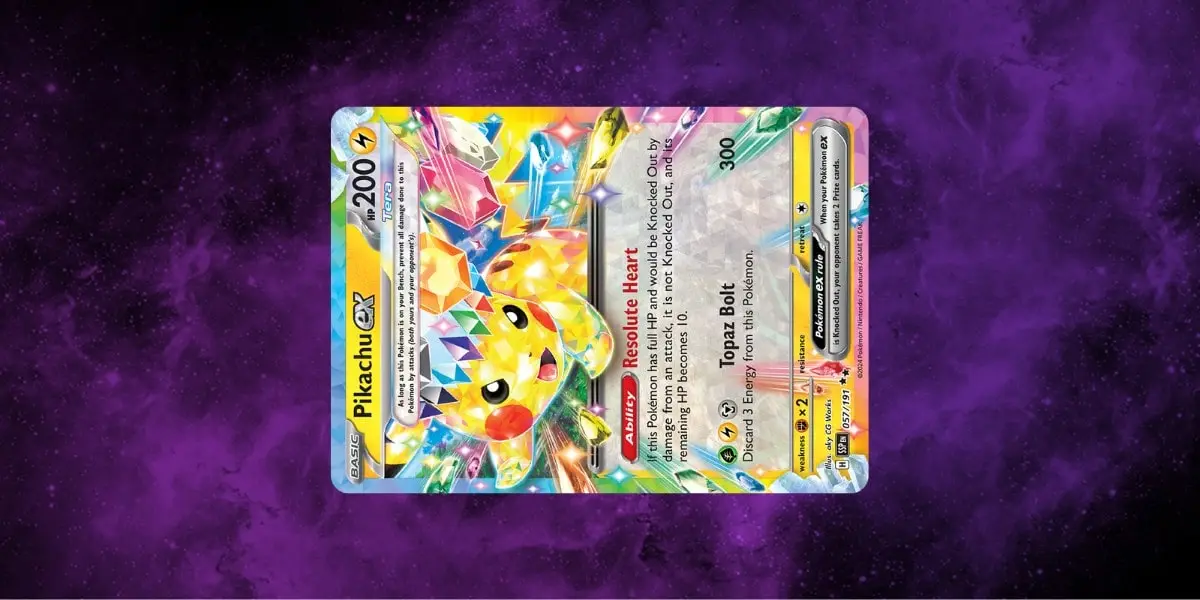
Sleep isn’t the most potent Special Condition- mainly because the likelihood of recovery lies on a coin toss and the affected Pokémon has a 50/50 chance of waking up immediately after it was put asleep. That unpredictability is exactly why Sleep doesn’t show often in top-tier decks. It’s inconsistent and doesn’t guarantee disruption the same way that Paralysis does.
But don’t count it out just yet.
In control decks or setup-heavy decks that need a turn or two of breathing room, Sleep can be a useful disruptor, buying you a precious turn or two to evolve, draw, or stabilize.
Confused
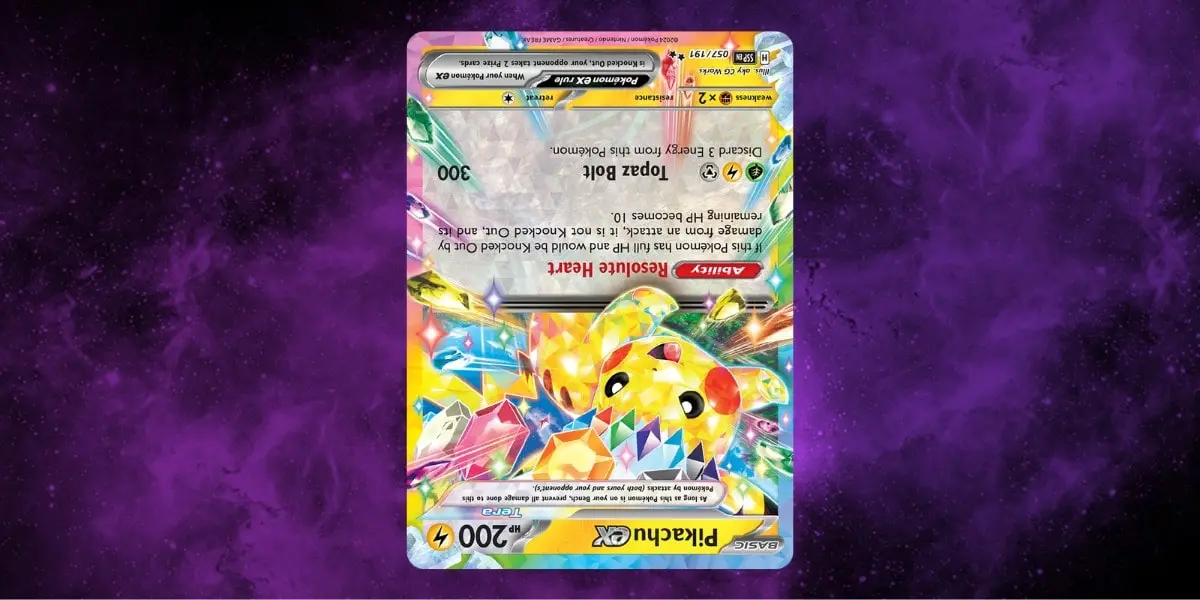
Confusion is the mind game of Special Conditions. Whilst it won’t completely shut down your opponent’s Pokémon, it will make them think twice before attacking.
That uncertainty forces tough decisions. Do they go for the attack and risk self-sabotage? Or retreat and burn Energy or a Switch card? Either way, they’re spending valuable resources.
Paralyzed
Now we’re getting into another dangerous Special Condition. Paralysis isn’t just annoying- it’s… debilitating.
Unlike Sleep or Confusion, Paralysis doesn’t rely on coin flips. If you’re Paralyzed you’re well and truly stuck. No attack. No retreat. No workaround- unless you can secure a switch card.
Crafty players even exploit this through “Paralysis Lock”- inflicting Paralysis every. single. turn. Doing this allows you to set up your board whilst your opponent’s Active Pokémon flails helplessly.
Better yet, combine Paralysis Lock with Item-lock or Ability-lock so they can’t even switch out the paralyzed Pokémon. It’s checkmate in slow motion.
General Rules For Special Conditions
Now that you understand the basics of Pokémon TCG Special Conditions, let’s talk about 5 nuanced rules that even veteran players sometimes trip up on.
1. Only Active Pokémon Can Be Affected
Special Conditions only affect the Active Pokémon. Your Benched Pokémon are safe. That means if your Active gets hit with a nasty effect, you can retreat to the bench, and bam- condition cleared.
2. Rotational Conditions Cannot Stack
Asleep, Paralyzed, Confused, all spin or flip the Pokémon sideways to indicate its condition. These are “rotational” Special Conditions.
A Pokémon can only be affected by one of these at a time. The newest effect always replaces the old. If your Pokémon is Asleep and then gets Paralyzed? The Paralysis takes over and Sleep is cleared.
3. Marker Conditions Can Stack
You can stack marker-based conditions: Poison and Burn. This means a Poisoned Pokémon that gets Burned is now Poisoned and Burned!
4. Rotational Conditions Can Stack With Marker Conditions
Now, here’s where it gets even spicier. Not only do marker-based conditions stack with each other, but they can also stack with rotational conditions. This means a Pokémon can be Asleep/Confused/Paralyzed and Poisoned/Burned at the same time.
Venusaur ex (MEW 003) comes to mind. It has the Dangerous Toxwhip Attack which makes your opponent’s Pokémon Poisoned and Confused. Deadly combo.
5. Resolve Special Conditions At Pokémon Checkup
With the exception of Confused and Paralyzed, Special Condition effects are activated during the Pokémon Checkup phase, which happens after each player’s turn. Below, you’ll what that looks like for each condition:
- Poisoned: Player One’s turn ends > apply 10 damage on checkup, Player Two’s turn ends > apply 10 damage on checkup.
- Burned: Player One’s turn ends > apply 20 damage and flip a coin on checkup, Player Two’s turn ends > apply 20 damage and flip a coin on checkup.
- Asleep: Player One’s turn ends > flip a coin on checkup, Player Two’s turn ends > flip a coin on checkup.
- Confused: coin is flipped only when a Pokémon tries to attack.
- Paralyzed: Pokémon cannot attack on its next turn.
Only after all of that do you check for knockouts from accumulated damage.
5. Special Conditions Are Resolved In Order
If multiple conditions are active on the battlefield, the effects must be resolved in the following order: Poisoned, Burned, Asleep, Confused, Paralyzed.
How to Remove Special Conditions
With the exception of Paralysis (which resolves after one turn), Special Conditions won’t wear off on their own. But the good news? You’ve got plenty of ways to shake them off.
1. Retreating
The simplest fix. Retreating a Pokémon to the bench heals all Special Conditions. You can do a manual retreat by paying its Energy cost- or if your Pokémon is Paralyzed/Asleep and cannot manual retreat, use switch cards like Prime Catcher (PRE 119).
2. Evolving And Devolving
Evolution and devolution remove all effects from Pokémon. Got the corresponding Stage 1 or Stage 2 Pokémon in your hand? Slap it onto the affected Pokémon to heal its condition. Maybe you’re holding a TM Devolution (PAR 177)? Devolve the affected Pokémon and it’s cured!
3. Using Trainer Cards
Some Trainer cards like Pokémon Center Lady (SSH 176) exist specifically to heal Special Conditions. These cards were more common in the previous Sword and Shield Format. Unfortunately, no such cards exist in the current 2025 rotation.
4. Pokémon Abilities
Some Pokémon come with Abilities that heal Special Conditions. In the previous Sword & Shield format, cards like Virizion V (ASR 164) had Abilities that heal or make your Pokémon immune to special conditions. Unfortunately, things are a bit more aggressive in the current Scarlet & Violet format- no such cards have been printed yet!
Conclusion
Pokémon TCG Special Conditions aren’t just a side mechanic- they’re powerful tools that can disrupt, stall, and slowly dismantle your opponent. Mastering when to apply them, how to clear them, and how they interact will help you succeed in today’s fast-paced meta.
FAQ

Kalam is a PTCG gameplay expert and content creator. He started playing and collecting Pokémon cards since 1996. When he’s not working, you can find him nerding out on Anime!
Ready To Level Up At PTCG?